


Chicago Premises Liability Lawyer
Property owners and managers have a duty to exercise reasonable care to keep their premises safe. When they fail, someone can suffer a serious injury, and those responsible may not be forthcoming about what happened.
You know what injured you. What you can’t see is how long the hazard was there, who was supposed to fix it, and who already knew. We start there.
Goldberg & Goldberg has fought for injured people in Chicago since 1967. We find out who owned, managed, cleaned, inspected, or repaired the property, what complaints were made, and what the records show. You don’t need any of those answers to call us. Getting them is our job.
Property owners keep records: inspection logs, maintenance requests, incident reports. We know where to look, and we don’t stop until we have the full picture of what happened before you were hurt.

Hurt on someone else’s property? Call Goldberg & Goldberg at 312-626-8416 for a free consultation.
What Does It Take to Prove a Premises Liability Claim in Illinois?
To establish a premises liability claim in Illinois, you generally must show that someone responsible for the property failed to exercise reasonable care and that this failure caused your injury.
Your case requires more than showing that you were injured on someone else’s property. The investigation may need to establish what caused your injury, who had responsibility for the area, whether that party knew or should have known about the condition, and whether there was a reasonable opportunity to address it.
That distinction matters. A serious injury does not by itself establish premises liability. The evidence surrounding the property condition can show whether another party’s conduct contributed to what happened.
Did the Property Owner Know About the Dangerous Condition?
One of the central questions in many premises liability cases is what the responsible party knew, or reasonably should have known, before you were injured.
Sometimes the evidence may show that an owner, employee, contractor, or another party created the dangerous condition. In other cases, the question is whether the condition existed long enough that it should have been discovered through reasonable inspection or maintenance.
You may have no way to answer that question from what you saw immediately after your accident.
Records created before you were injured can become important. Inspection schedules, maintenance requests, complaints, work orders, surveillance footage, and employee records may help establish when a problem developed and whether anyone had an opportunity to address it.
Goldberg & Goldberg can investigate what was happening on the property before your injury rather than relying only on what was visible afterward.
- Personal Injury
- Car Accidents
- Commercial Trucking Accidents
- Motorcycle Accidents
- Bicycle Accidents
- Pedestrian Injury Cases
- Bus Accidents
- Railroad and Train Accidents: Experienced Legal Representation for Serious Train Injuries
- Construction Accidents: Experienced Legal Help for Injured Construction Workers
- Nursing Home Abuse and Neglect: Compassionate Legal Help for Families in Illinois
- Premises Liability Accidents Legal Representation in Illinois
- Explosion and Fire Litigation
- Sexual Abuse: Giving Voice To The Voiceless
- Spinal Cord Injuries
- Traumatic Brain Injury (TBI)
- Wrongful Death & Survival Claims
- Aviation Litigation
- Foster Care Abuse and Neglect
- Troubled Teen Program Negligence Lawyers
Dangerous Property Conditions That Can Lead to Injuries
Premises liability is not limited to one type of accident in Chicago. The condition that injured you can affect what evidence matters and who may have been responsible for addressing the hazard.
Unsafe Floors, Walkways, and Stairs
Wet floors, damaged pavement, loose flooring, broken steps, missing handrails, and uneven walking surfaces can create fall hazards. The investigation may focus on how the condition developed, how long it existed, whether inspections occurred, and whether repairs or warnings should have followed.
Snow and Ice Conditions
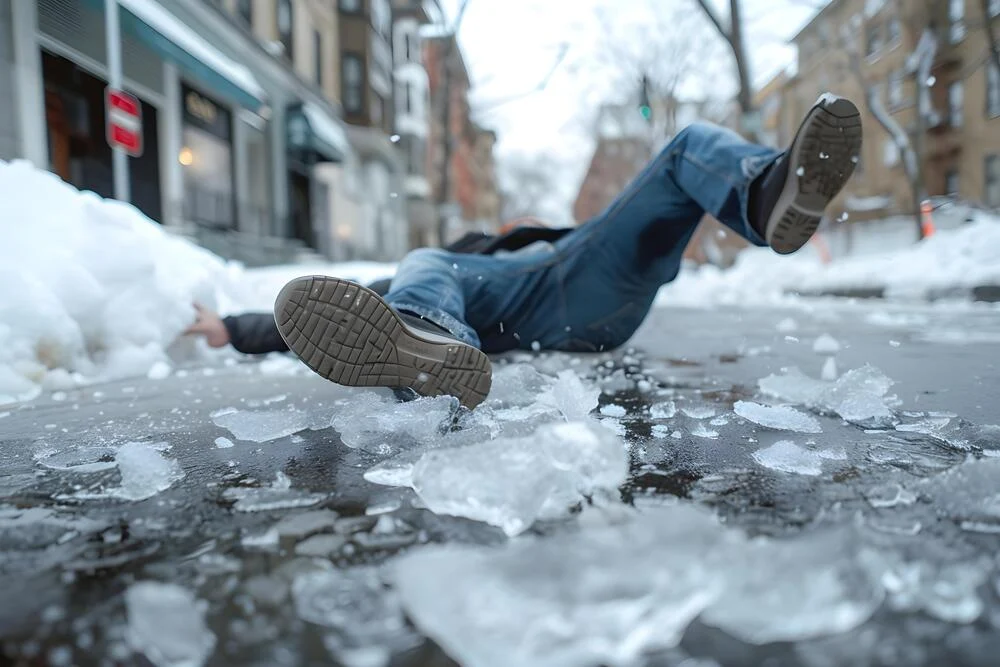
Chicago winters create recurring questions about responsibility for snow and ice on sidewalks, entrances, parking areas, and other walking surfaces. Illinois premises liability law treats snow and ice differently from many other hazards. Property owners generally are not required to remove natural accumulations of snow and ice. However, liability may arise when defective gutters, improper drainage, or other property conditions create unnatural accumulations, or when negligent snow removal creates or worsens a dangerous condition. Contractual responsibilities and other circumstances may also affect who can be held liable.
Elevator and Escalator Problems
An elevator or escalator injury may raise questions about maintenance, inspection, repair, or equipment performance. Depending on the circumstances, responsibility may extend beyond the property owner to a maintenance company, contractor, or another party involved with the equipment.
Poor Lighting and Visibility
Inadequate lighting can make stairs, changes in elevation, obstacles, or other hazards difficult to see. Photographs, maintenance information, and evidence about the lighting at the time of your accident may help establish the conditions you encountered.
If you have questions about what evidence may exist after your injury, call Goldberg & Goldberg at 312-626-8416 for a free consultation.
What Evidence Can Show How Long a Dangerous Condition Existed?
You may have seen the hazard only moments before you were injured, but other evidence may show what happened hours, days, or even longer beforehand.
The available evidence depends on the property and type of accident. It may include:
- Surveillance footage
Inspection and - maintenance records
Incident reports - Work orders and repair records
- Prior complaints about the condition
- Photographs or video of the area
- Witness or employee information
The value of those records is not simply that they document the scene. They can help answer different questions.
Surveillance footage may show when a spill appeared or how long an obstruction remained in a walkway. A maintenance record may show when equipment was last serviced. A work order may establish that a repair had already been requested. An inspection log may help reconstruct what employees checked before your accident.
Some evidence can change or disappear quickly. A spill can be cleaned, broken equipment can be repaired, snow can melt, and surveillance footage can be overwritten. You do not need to obtain all of this information yourself. Goldberg & Goldberg can identify the records that may matter and take steps to pursue them.
Who Can Be Held Responsible for an Injury on Someone Else’s Property?
The property owner is not always the only party responsible for an injury caused by dangerous conditions. Depending on who controlled, maintained, or created the hazard, liability may extend to several parties, including:
- Property owners: Individuals or companies that failed to exercise reasonable care in maintaining their property.
- Property management companies: Companies responsible for inspections, repairs, maintenance, or addressing reported hazards.
- Business owners and tenants: Businesses that occupy or control a property and fail to address dangerous conditions within their area of responsibility.
- Maintenance and cleaning contractors: Third parties whose negligent work or failure to fulfill their responsibilities contributed to the dangerous condition.
- Elevator and equipment service companies: Contractors responsible for inspecting, maintaining, or repairing equipment involved in an injury.
A commercial building, for example, may have one company that owns the property, another that manages it, and several contractors responsible for maintenance. Each may have different obligations, and determining who failed to meet those obligations requires examining contracts, inspection records, maintenance responsibilities, and the circumstances of the accident.
At Goldberg & Goldberg, we don’t stop at the name on the property deed. We investigate who had control over the dangerous condition, who was responsible for correcting it, and whose negligence contributed to your injury. When more than one party shares responsibility, we work to identify and hold each accountable.
What if the Property Owner Says You Should Have Seen the Hazard?
A property owner or insurer may argue that the condition was visible and that you should have avoided it. That argument does not mean you should assume you have no claim.
Illinois law can consider whether a condition was open and obvious, and your own conduct may also become part of the fault analysis. Under Illinois comparative-fault rules, compensation can be reduced when an injured person shares responsibility, and recovery is barred when that person’s contributory fault is more than 50 percent of the proximate cause of the injury.
The circumstances matter. Where you were looking, why you were in the area, the visibility of the condition, surrounding activity, lighting, warnings, and the nature of the hazard may all require consideration.
If you are blamed for your accident, Goldberg & Goldberg can investigate what the evidence shows rather than accepting the property owner’s version of events.
How Do You Show What a Premises Liability Injury Has Cost You?
The condition of the property may explain why you were injured, but your claim must also show what the injury has taken from you. That requires looking at your life before and after the accident.
Medical records can establish your diagnosis, treatment, surgeries, rehabilitation, and continuing care. Employment records may show time you missed from work or changes in your ability to earn a living. Other evidence can document limitations that are harder to see on a medical bill.
Maybe you can no longer perform the same job, climb the stairs in your home, drive comfortably, care for your children, or return to activities you regularly handled before your injury. A permanent scar or physical limitation may continue long after treatment ends.
Goldberg & Goldberg works to document those consequences so your claim reflects what the accident has actually changed in your life.
How Goldberg & Goldberg Investigates Premises Liability Accidents
You may know where you were injured and what caused you to fall or suffer harm, while much of the information needed to understand why it happened remains in someone else’s possession.
Goldberg & Goldberg works to uncover that history. We trace responsibility for the property, pursue records created before your accident, and look for information showing when the condition developed and what was done about it. You do not need to obtain maintenance files, surveillance footage, contracts, or inspection records yourself. Our job is to find the facts you cannot readily access and use them to build your case.
Frequently Asked Questions About Premises Liability Accidents
You may have questions about your claim that cannot be answered simply by knowing where you were injured. These FAQs address situations that can affect how a premises liability case is investigated.
What if I Did Not Take a Picture of the Dangerous Condition?
Not having a photograph does not automatically prevent you from pursuing a claim. Other information may help establish what the property looked like and what caused your injury. Surveillance footage, witness accounts, incident reports, maintenance records, repair information, and photographs taken by others may become relevant. An attorney can investigate what evidence may still exist.
Can I Have a Claim if I Was Injured at a Store or Restaurant?
A store or restaurant injury can support a premises liability claim when the facts establish that a dangerous condition caused your injury and a responsible party failed to use reasonable care under the circumstances. The investigation may focus on how the condition developed, inspection practices, employee knowledge, warnings, and how long the hazard existed.
What if I Was Injured at My Apartment Building?
If you were injured at an apartment building in Chicago or elsewhere in Cook County, the investigation may require a review of who controlled and maintained the area where you were hurt. Responsibility for a stairway, hallway, entrance, parking area, or other common space may differ from responsibility inside an individual unit. Lease terms, maintenance records, repair requests, and property-management responsibilities may help clarify who was responsible.
What if the Dangerous Condition Was Fixed After My Accident?
A repair after your accident does not necessarily answer whether the property was unsafe when you were injured. The condition may have been photographed, recorded on surveillance footage, described in an incident report, or documented in maintenance records. Goldberg & Goldberg can investigate what evidence remains and what information existed before the repair occurred.
What if I Reported the Dangerous Condition Before I Was Injured?
A complaint you made before your accident may become important because it can help establish that someone responsible for the property had information about the condition. Keep any emails, text messages, maintenance requests, photographs, or other records showing what you reported and when. The investigation can then address who received that information, whether any action followed, and what condition remained when you were injured.
Talk With Goldberg & Goldberg About Your Premises Liability Accident
You already know what your injury has cost you. What you may not know is how long the dangerous condition existed, who had responsibility for correcting it, what records were created before you were hurt, or whether others knew about the problem. You do not have to find those answers yourself.
Goldberg & Goldberg can investigate the property, identify the parties involved, pursue relevant records, address disputes over fault, and build your claim around what happened to you.
If you were injured because of an unsafe property condition in Chicago or elsewhere in Illinois, call Goldberg & Goldberg at 312-626-8416 for a free consultation.
Client Reviews
Get in Touch
1 Free Consultation
2 Brutal Honesty
3 Tender Loving Care
Fill out the contact form or call us at 312-626-8416 to schedule your free consultation.